

What Causes Attention Deficit Hyperactivity Disorder in Adults?
While genetic factors and neurological differences primarily drive adult ADHD, understanding how these elements uniquely impact your daily routine is the core of effective care. Nimrode N Aridou, PMHNP-BC, MSN, BSN, RN, looks beyond generic diagnoses to explore the biological and lifestyle variables shaping your executive function. For more information, contact us or request an appointment online. We are conveniently located at 6640 Wilkinson blvd, suite 500, Belmont, NC 28012.
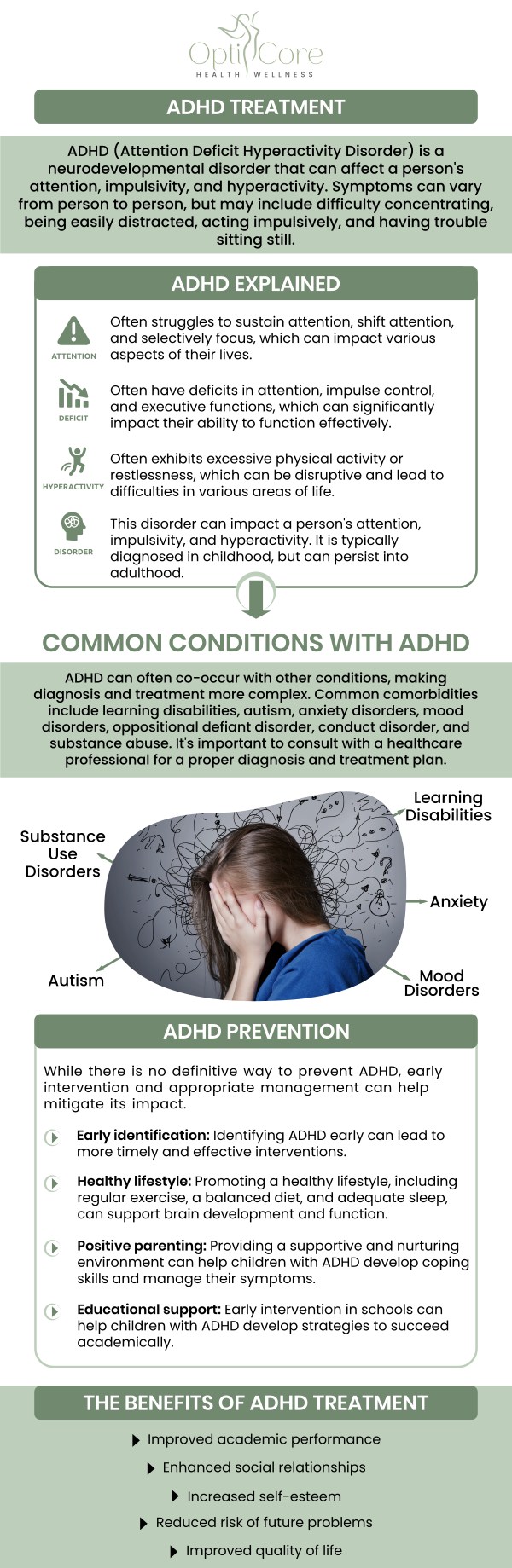
Table of Contents:
What evidence exists that genetics contribute to the development of ADHD in adults?
Are there clear single causes of ADHD in adults, or is it influenced by multiple factors?
How might environmental factors affect the risk of developing ADHD in adults?
What role do neurodevelopmental processes and brain maturation play in adult ADHD?
How Can Nimrode N Aridou, PMHNP-BC, MSN, BSN, RN Help You Navigate Adult ADHD?
At OptiCore Health and Wellness, we recognize that Attention-Deficit/Hyperactivity Disorder (ADHD) in adults is a complex condition influenced by both genetics and environmental factors. Substantial scientific research indicates that genetics play a significant role in the development of ADHD. Family studies have shown that ADHD often runs in families, and individuals with a close relative—such as a parent or sibling—diagnosed with ADHD are at a higher risk for developing the disorder themselves. Twin studies further reinforce the genetic connection, revealing that identical twins are more likely to both have ADHD than non-identical twins. In fact, researchers estimate that genetic factors account for approximately 70 to 80 percent of the risk for developing ADHD.
At OptiCore Health and Wellness, we stay informed about the latest advances in molecular genetics that have identified specific gene variations, such as those related to dopamine regulation, which are linked to increased risk for ADHD. Our approach to diagnosing and managing adult ADHD considers these scientific insights, ensuring that our care is grounded in the most current understanding of the disorder’s origins. We know that genetic predisposition does not guarantee the development of ADHD; environmental influences and life experiences also play significant roles.
Our team at OptiCore Health and Wellness is committed to providing comprehensive, personalized care. Whether you are seeking evaluation, diagnosis, or ongoing management for adult ADHD, we consider your unique genetic background, family history, and life circumstances in developing a tailored treatment plan. By integrating the latest genetic research with compassionate, patient-centered care, we strive to help you achieve optimal mental health and well-being.
ADHD in adults is a complex condition with no single identifiable cause. Instead, research shows that ADHD arises from a combination of genetic, environmental, and neurological factors. Genetics can play a significant role, as ADHD often runs in families and is linked to certain genes that regulate brain chemicals. However, genes are only part of the picture.
Environmental influences—such as exposure to toxins like lead during childhood, premature birth, low birth weight, and maternal substance use—can also contribute to the development of ADHD. Additionally, studies have shown that differences in brain structure and function, especially in areas that control attention and impulse regulation, are often present in people with ADHD.
Environmental factors play a significant role in the risk of developing Attention-Deficit/Hyperactivity Disorder (ADHD) in adults. While genetics are a key contributor, lifelong exposure to certain environmental influences—especially during critical periods of brain development—can increase the likelihood and severity of ADHD symptoms.
Research has shown that prenatal exposure to toxins such as tobacco smoke, alcohol, or lead can negatively affect the developing brain and increase the risk of ADHD. Complications during pregnancy or birth, such as premature birth or low birth weight, are also associated with a heightened vulnerability. At OptiCore Health and Wellness, we emphasize early intervention and education for expectant mothers, helping to minimize these risks and support healthy brain development from the very beginning.
Ongoing exposure to environmental pollutants—like lead in water or poor air quality—may further disrupt brain development and contribute to ADHD symptoms. Poor childhood nutrition, especially deficiencies in essential nutrients, has also been linked to cognitive and behavioral challenges. Our team offers personalized nutrition counseling and environmental risk assessments to help families create the healthiest possible environment for their children as they grow.
Stressful home environments, trauma, and lack of support can impact brain functioning and self-regulation, increasing the risk of ADHD symptoms in adulthood. Chronic exposure to stress can disrupt neurotransmitter systems involved in attention and impulse control. At OptiCore Health and Wellness, we provide integrative behavioral health services and stress management programs designed to address these psychosocial factors and support overall mental wellness.
Additionally, lifestyle habits such as poor sleep, lack of physical activity, and excessive screen time can aggravate attention problems in adults. Our wellness team works with clients to develop practical strategies that promote restorative sleep, regular exercise, and healthy technology use—empowering our patients to optimize their daily routines and improve focus.
At OptiCore Health and Wellness, we understand that environmental factors interact with genetic predispositions to influence ADHD symptoms. Our comprehensive, holistic approach to ADHD care includes prevention, early detection, personalized treatment, and lifestyle coaching. By addressing both genetic and environmental components, we help our patients manage symptoms more effectively and improve their overall quality of life.
Neurodevelopmental processes and brain maturation are fundamental to understanding conditions like adult Attention-Deficit/Hyperactivity Disorder (ADHD). ADHD is a neurodevelopmental disorder, meaning its roots lie in how the brain develops and matures—especially during childhood and adolescence. Critical brain regions, such as the prefrontal cortex, are responsible for attention, impulse control, and executive functioning. In individuals with ADHD, research reveals that these processes can be delayed or develop differently, leading to ongoing challenges with focus, organization, and self-regulation.
Importantly, these neurodevelopmental differences do not always resolve with age. While some individuals may see a reduction in symptoms as their brain continues to mature, others experience persistent symptoms that can interfere with everyday life. Advanced neuroimaging studies have shown that subtle but significant differences in brain structure and function can persist into adulthood, particularly in areas related to motivation, attention, and behavioral regulation.
At OptiCore Health and Wellness, we understand that adult ADHD is not simply a continuation of childhood symptoms. Rather, it reflects the lifelong interplay between neurodevelopmental differences and individual life experiences. While the brain’s plasticity allows many people to develop coping strategies or compensatory mechanisms, some require ongoing support and management to thrive.
Uncovering the root causes of adult ADHD is the first step toward reclaiming focus, but true progress requires a personalized path forward. Nimrode N Aridou, PMHNP-BC, MSN, BSN, RN, approaches adult ADHD care with a philosophy that is never rushed and never cookie-cutter. At Opticore, the journey begins with an exhaustive, tailored ADHD evaluation to look beyond the surface of years of frustration and missed potential. From there, Nimrode collaborates with you to craft an individualized strategy. This integrative model seamlessly blends precise medication management, honest check-ins, and evidence-based therapeutic interventions—all designed to align with your personal goals, history, and lifestyle without a shred of judgment.
Our approach to ADHD care is rooted in the latest scientific understanding of neurodevelopment and brain health. We emphasize early recognition, comprehensive assessment, and personalized treatment plans that address the unique needs of each patient. For more information, contact us or request an appointment online. We are conveniently located at 6640 Wilkinson blvd, suite 500, Belmont, NC 28012. We serve patients from Belmont NC, Cramerton NC, Mount Holly NC, Lowell NC, Gastonia NC, Stanley Dallas NC, and surrounding cities.
Check Out Our 5 Star Reviews


Additional Services You May Need

Additional Services You May Need
▸ ADHD Specialist
▸ Telepsychiatry
▸ Medication Management
▸ Anxiety
▸ Depression
▸ Alcohol/ Substance Use Disorder
▸ Mental Health Evaluations
▸ Psychiatric Evaluations
▸ Mobile Psychiatry
▸ Crisis Intervention
▸ Staff Consultation
▸ Anger Management
▸ Addiction
▸ Mood Disorders
▸ Insomnia
▸ Trauma
▸ PTSD


 Send Text
 How May I Help You?