

Why Do Some Adults Develop ADHD Symptoms Later in Life?
When lifelong coping mechanisms finally break down under new pressures, adults often experience sudden, severe procrastination, crippling brain fog, and an inability to manage once-simple schedules. Nimrode N Aridou, PMHNP-BC, MSN, BSN, RN, expertly evaluates these late-emerging signs of ADHD, offering accurate testing and tailored neuro-optimization to help you navigate these unexpected cognitive shifts. For more information, contact us or request an appointment online. We are conveniently located at 6640 Wilkinson blvd, suite 500, Belmont, NC 28012.
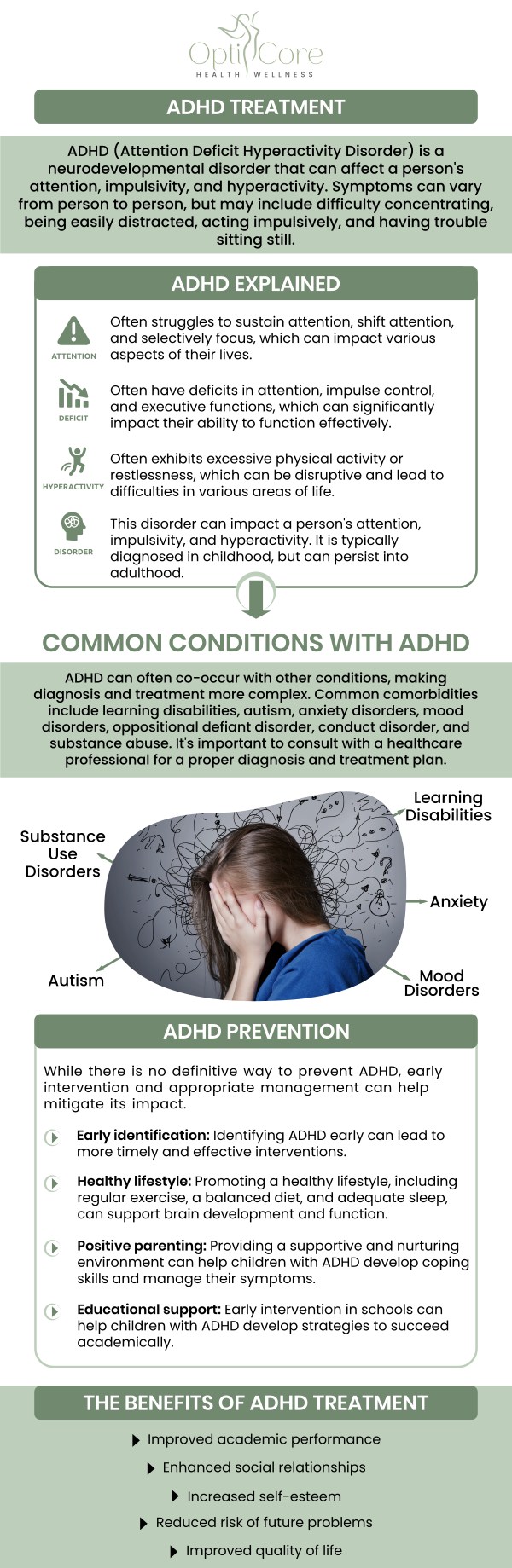
Table of Contents:
Can ADHD symptoms appear for the first time during adulthood?
Why might ADHD symptoms go unnoticed during childhood and become more noticeable later?
How can life changes and increased responsibilities reveal ADHD symptoms in adults?
What factors can contribute to the recognition of ADHD symptoms later in adulthood?
Navigating Late-in-Life ADHD Symptoms with Nimrode N Aridou, PMHNP-BC, MSN, BSN, RN
At OptiCore Health and Wellness, we understand that Attention-Deficit/Hyperactivity Disorder (ADHD) is often associated with childhood, but its symptoms can sometimes become most noticeable during adulthood. Many adults who seek care with us discover that they have experienced ADHD symptoms since childhood—such as difficulty concentrating, staying organized, or managing impulsivity—but these signs may have been mild, overlooked, or attributed to other causes earlier in life.
As life demands evolve, new professional and personal responsibilities can intensify these symptoms, making them more disruptive and prompting adults to seek answers. It’s important to remember that, according to current medical guidelines, ADHD is a neurodevelopmental disorder that begins in childhood, even if it is not formally diagnosed until adulthood. The official criteria for diagnosis require that some symptoms must have been present before age 12, even if they were not recognized as ADHD at the time.
At OptiCore Health and Wellness, our experienced healthcare providers recognize that other factors—such as stress, anxiety, depression, sleep disorders, or other medical conditions—can sometimes create symptoms that mimic or overlap with ADHD. While these challenges can impact attention and organization, they are distinct from ADHD and require a tailored approach.
If you or a loved one is experiencing difficulties with focus, organization, or impulse control for the first time in adulthood, a comprehensive assessment is crucial. Our team at OptiCore Health and Wellness offers thorough evaluations to help distinguish between ADHD and other possible causes of your symptoms. Identifying the true source of your challenges is essential for developing the most effective treatment plan—whether that involves ADHD management or addressing another underlying condition.
At OptiCore Health and Wellness, we recognize that ADHD symptoms often go unnoticed during childhood for a variety of reasons, and may only become more apparent as a person gets older. In early childhood, the structured and supportive environments created by parents, teachers, and caregivers—through routines, reminders, and close supervision—can help mask a child’s difficulties with attention, organization, or impulsivity. Since young children naturally have shorter attention spans, it can be challenging to distinguish between typical behavior and symptoms of ADHD.
As individuals grow into adolescence and adulthood, the demands of daily life increase. They are expected to manage complex tasks, maintain schedules, and stay organized with less external support. At OptiCore Health and Wellness, we frequently see that these increased expectations can reveal underlying ADHD symptoms. For instance, difficulties with attention, time management, and organization may become more obvious when a person is required to handle schoolwork, jobs, or daily responsibilities independently.
It’s also important to note that some children with ADHD, especially those with inattentive-type ADHD, may not display hyperactive or disruptive behaviors. Without obvious signs of hyperactivity, their struggles can be mistaken for daydreaming, shyness, or lack of motivation. This is particularly common in girls, whose symptoms may be less likely to attract attention from teachers or parents. At OptiCore Health and Wellness, our team is trained to identify even subtle presentations of ADHD, ensuring a thorough and accurate assessment.
Many children also develop coping mechanisms to manage their symptoms, such as working extra hard to stay organized or relying on support from others. While these strategies can be effective for a time, they may not be sustainable as life’s demands grow. Our specialists at OptiCore Health and Wellness can help both children and adults recognize when these coping strategies are no longer enough, and provide guidance on more effective ways to manage ADHD.
Finally, a lack of awareness or understanding of ADHD among parents, teachers, or healthcare providers can lead to misinterpretation of symptoms. Struggles with attention or organization may be incorrectly attributed to laziness, lack of intelligence, or emotional issues. At OptiCore Health and Wellness, we are committed to increasing awareness and understanding of ADHD, providing comprehensive evaluations and individualized treatment plans for our patients.
At OptiCore Health and Wellness, we understand that many adults living with ADHD may not have received a diagnosis during childhood—especially if their symptoms were mild or if they learned to cope effectively at a young age. However, as life progresses and responsibilities increase—such as starting a new career, pursuing higher education, getting married, or becoming a parent—ADHD symptoms often become more noticeable and challenging.
As the demands of adult life grow, skills like multitasking, organizing, prioritizing, and effective time management become essential for daily success. Adults with undiagnosed ADHD may suddenly find themselves struggling with chronic forgetfulness, difficulty meeting deadlines, persistent lateness, or feeling overwhelmed by day-to-day obligations. These challenges often become most apparent when the familiar structures and support systems of school or family are replaced by the need for independent self-management.
For example, someone who managed well in high school may begin to struggle in college, where there is less external structure, or in a workplace that requires independent planning and follow-through. Similarly, the transition to parenthood can highlight difficulties with attention, memory, and emotional regulation, as caring for a child requires sustained organization and focus.
At OptiCore Health and Wellness, we recognize that these life transitions can reveal previously unrecognized symptoms—such as distractibility, impulsivity, and disorganization—that may have once been mistaken for stress or aspects of personality. It’s often only when these symptoms begin to interfere with work performance, relationships, or overall well-being that adults seek evaluation and receive an ADHD diagnosis.
At OptiCore Health and Wellness, we recognize that ADHD symptoms are often identified for the first time in adulthood, and several factors contribute to this experience. Many individuals develop effective coping mechanisms during childhood and adolescence, which can mask ADHD symptoms until greater demands arise—such as managing a career or family responsibilities. As patients transition from structured school environments to less structured work or home settings, challenges with organization, time management, and sustained attention often become more apparent and difficult to manage without support.
In our practice, we frequently see that coexisting mental health concerns, like anxiety or depression, can complicate the diagnostic process. These conditions may overshadow symptoms of ADHD, leading to misdiagnosis or a delayed diagnosis. Additionally, cultural perceptions and stigma surrounding ADHD can prevent individuals from seeking help or even recognizing their symptoms. At OptiCore Health and Wellness, we strive to create a welcoming and understanding environment where patients feel comfortable discussing their concerns without judgment.
With increased awareness and education about ADHD—both within the medical community and among the general public—many adults are now recognizing symptoms that may have persisted for years but were previously misunderstood. Importantly, adult ADHD may not always present with hyperactivity; instead, symptoms may center around inattention, disorganization, or executive dysfunction, making them less obvious.
Many individuals only begin experiencing severe ADHD symptoms in adulthood, often when escalating career demands or major life transitions finally overwhelm their lifelong coping strategies. When these unexpected cognitive challenges arise, waiting months for an evaluation can severely impact your daily life.
At OptiCore Health & Wellness, Clinical Director and Neuro-Optimization Specialist Nimrode N Aridou, PMHNP-BC, MSN, BSN, RN, expertly addresses the complex nuances of adult-diagnosed ADHD. By removing traditional healthcare barriers, Nimrode delivers a highly accessible, telehealth-driven experience. Through comprehensive tiered ADHD testing, customized medication management, and tailored support, he helps adults finally make sense of their changing minds. Stop struggling with sudden focus and organizational issues—partner with OptiCore to gain diagnostic clarity and restore your mental edge.
Our team at OptiCore Health and Wellness is dedicated to comprehensive assessment and personalized care for adults who may be struggling with undiagnosed ADHD. If you are experiencing persistent difficulties in daily functioning, or if a family member’s diagnosis has prompted you to reflect on your own experiences, we are here to help you understand and address your symptoms, empowering you to achieve greater well-being. For more information, contact us or request an appointment online. We are conveniently located at 6640 Wilkinson blvd, suite 500, Belmont, NC 28012. We serve patients from Belmont NC, Cramerton NC, Mount Holly NC, Lowell NC, Gastonia NC, Stanley Dallas NC, and surrounding cities.
Check Out Our 5 Star Reviews


Additional Services You May Need

Additional Services You May Need
▸ ADHD Specialist
▸ Telepsychiatry
▸ Medication Management
▸ Anxiety
▸ Depression
▸ Alcohol/ Substance Use Disorder
▸ Mental Health Evaluations
▸ Psychiatric Evaluations
▸ Mobile Psychiatry
▸ Crisis Intervention
▸ Staff Consultation
▸ Anger Management
▸ Addiction
▸ Mood Disorders
▸ Insomnia
▸ Trauma
▸ PTSD


 Send Text
 How May I Help You?