

What Causes ADHD in Adults?
Regardless of the complex genetic or environmental roots behind the condition, the daily reality of adult ADHD often involves chronic disorganization, missed deadlines, and exhausting emotional dysregulation. Nimrode N Aridou, PMHNP-BC, MSN, BSN, RN, focuses on actively treating these disruptive daily symptoms, moving beyond the causes to deliver a personalized treatment plan that restores your focus and drive. For more information, contact us or request an appointment online. We are conveniently located at 6640 Wilkinson blvd, suite 500, Belmont, NC 28012.
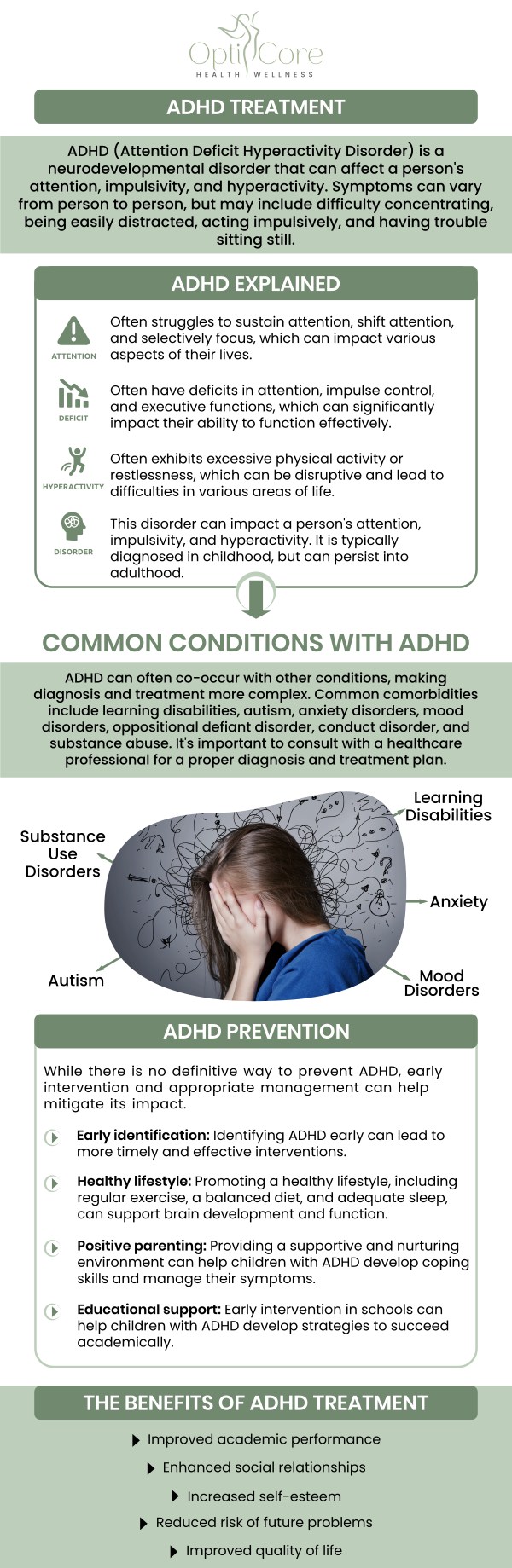
Table of Contents:
What are the main factors that contribute to ADHD development in adults?
Can genetics play a role in causing ADHD in adults?
How do brain differences contribute to ADHD symptoms in adults?
Are environmental factors linked to the development of adult ADHD?
How Can Nimrode N Aridou, PMHNP-BC, MSN, BSN, RN, Help You Navigate the Complex Causes of Adult ADHD?
At OptiCore Health and Wellness, we understand that Attention Deficit Hyperactivity Disorder (ADHD) in adults is a complex condition influenced by multiple factors. Our approach to ADHD care recognizes the interplay between genetics, brain function, and environmental influences.
Genetics play a significant role, as ADHD often runs in families. Scientific research links specific genes—especially those involved in dopamine regulation—to the disorder. Additionally, differences in brain structure and function, particularly in areas responsible for attention, organization, and impulse control, are commonly observed in adults with ADHD.
Environmental factors during early development can further increase risk. These include prenatal exposures (such as alcohol, tobacco, or other substances), exposure to toxins like lead, premature birth, or low birth weight. Throughout life, stressful environments, adverse childhood experiences, and chronic psychosocial adversity can also contribute to the onset or worsening of ADHD symptoms.
At OptiCore Health and Wellness, we recognize that every individual’s experience with ADHD is unique. Our team takes a holistic, personalized approach to diagnosis and care, considering each patient’s genetic background, neurological profile, and life experiences. We aim to empower our patients with comprehensive support and evidence-based strategies to help them thrive.
At OptiCore Health and Wellness, we recognize the importance of understanding all factors that contribute to conditions like Attention Deficit Hyperactivity Disorder (ADHD) in adults. One significant factor is genetics. Research consistently shows that ADHD tends to run in families—if you have a close relative, such as a parent or sibling, with ADHD, your risk of developing the condition is notably higher.
Scientists have discovered that multiple genes, particularly those involved in regulating neurotransmitters like dopamine, can increase susceptibility to ADHD. Dopamine plays a crucial role in attention, motivation, and impulse control—key areas often affected by ADHD. Twin and family studies demonstrate that genetic factors can account for as much as 70 to 80 percent of the risk for developing ADHD.
While genetics form a strong foundation, it’s important to remember that environmental factors—such as prenatal exposures, low birth weight, or early life stress—also influence the likelihood of developing ADHD. At OptiCore Health and Wellness, we take a comprehensive approach, considering both your genetic background and environmental history when evaluating and managing ADHD.
If you have a family history of ADHD or are experiencing symptoms yourself, our team at OptiCore Health and Wellness is here to support you. We offer personalized assessments and integrative care to help you better understand your risks and manage your health effectively.
At OptiCore Health and Wellness, we understand that Attention-Deficit/Hyperactivity Disorder (ADHD) in adults is deeply rooted in differences in brain structure and function. Advanced research, including brain imaging studies, confirms that key regions of the brain responsible for attention, impulse control, and executive functioning—such as the prefrontal cortex, basal ganglia, and the default mode network—often operate differently in individuals with ADHD.
The prefrontal cortex, which plays a vital role in organizing thoughts, managing time, and regulating behavior, may be less active or develop differently in adults with ADHD. This can lead to real-world challenges with planning, prioritizing, and staying focused—issues we frequently address with our patients at OptiCore Health and Wellness.
Neurotransmitter systems, particularly dopamine and norepinephrine, are also affected in adults with ADHD. These chemical messengers are essential for motivation, reward processing, and attention. When their balance is disrupted, symptoms such as distractibility, impulsivity, and difficulty sustaining effort can emerge. Our team at OptiCore Health and Wellness takes these neurochemical factors into account when designing personalized treatment plans.
Additionally, differences in brain connectivity can affect how efficiently regions responsible for attention and self-regulation communicate. This may make it harder for adults with ADHD to filter distractions or shift focus as needed, contributing to ongoing struggles with organization, time management, and emotional regulation—even for those who have developed coping strategies over time.
At OptiCore Health and Wellness, we believe that understanding these neurological foundations is key to accurately diagnosing ADHD in adults and developing effective, individualized treatment approaches. Our comprehensive care model combines medical expertise, holistic wellness strategies, and evidence-based therapies to support adults with ADHD in achieving better focus, organization, and overall well-being.
At OptiCore Health and Wellness, we recognize that adult Attention-Deficit/Hyperactivity Disorder (ADHD) is a complex condition influenced by both genetic and environmental factors. While genetics are the primary driver, research shows that environmental influences can also play a significant role in the development and severity of ADHD symptoms in adulthood.
Environmental factors such as childhood exposure to toxins (like lead), prenatal exposure to tobacco smoke, alcohol, or drugs, as well as complications during pregnancy or birth, may increase the risk of ADHD. Additionally, early life experiences—including significant psychosocial adversity, trauma, or chronic stress—have been linked to a higher likelihood of ADHD symptoms persisting or emerging later in life. These factors can interact with genetic predispositions, potentially making symptoms more pronounced.
At OptiCore Health and Wellness, our comprehensive approach to ADHD takes into consideration each patient’s unique genetic background and environmental history. We use this knowledge to inform our personalized treatment plans, aiming to address the root causes and contributing factors of ADHD. By understanding how environmental and genetic factors affect brain development and function, we can better support our patients in managing attention, impulse control, and other cognitive challenges associated with ADHD.
While the exact causes of adult ADHD involve a complicated mix of genetics, brain chemistry, and environmental factors, the daily disruption to your focus and productivity is undeniable. When you need real answers to understand your neurodevelopmental challenges, waiting months for a traditional psychiatric appointment shouldn’t be the standard.
At OptiCore Health & Wellness, Clinical Director and Neuro-Optimization Specialist Nimrode N Aridou, PMHNP-BC, MSN, BSN, RN, offers a streamlined, telehealth-first approach to untangling your symptoms. By utilizing precise tiered ADHD testing, highly individualized medication management, and supportive group therapy, Nimrode cuts through clinical red tape to deliver fast, evidence-based care. Stop letting untreated cognitive hurdles dictate your life—partner with a specialist who prioritizes your time and long-term results.
If you or a loved one is experiencing symptoms of adult ADHD, OptiCore Health and Wellness is here to help with compassionate, evidence-based care tailored to your individual needs. For more information, contact us or request an appointment online. We are conveniently located at 6640 Wilkinson blvd, suite 500, Belmont, NC 28012. We serve patients from Belmont NC, Cramerton NC, Mount Holly NC, Lowell NC, Gastonia NC, Stanley Dallas NC, and surrounding cities.
Check Out Our 5 Star Reviews


Additional Services You May Need

Additional Services You May Need
▸ ADHD Specialist
▸ Telepsychiatry
▸ Medication Management
▸ Anxiety
▸ Depression
▸ Alcohol/ Substance Use Disorder
▸ Mental Health Evaluations
▸ Psychiatric Evaluations
▸ Mobile Psychiatry
▸ Crisis Intervention
▸ Staff Consultation
▸ Anger Management
▸ Addiction
▸ Mood Disorders
▸ Insomnia
▸ Trauma
▸ PTSD


 Send Text
 How May I Help You?